Service
Board Governance and Training
Governance done well is an asset. It tells a board how to behave, where the money goes, and what to do when someone loses the plot.

The problem
Most boards treat governance as paperwork. Members don't always understand the fiduciary responsibility they carry, the charter and bylaws go unused, and when a member drifts off mission or a conflict creeps in, there is no clean way to handle it. The board senses it should understand its role better, or it is already heading off the rails.
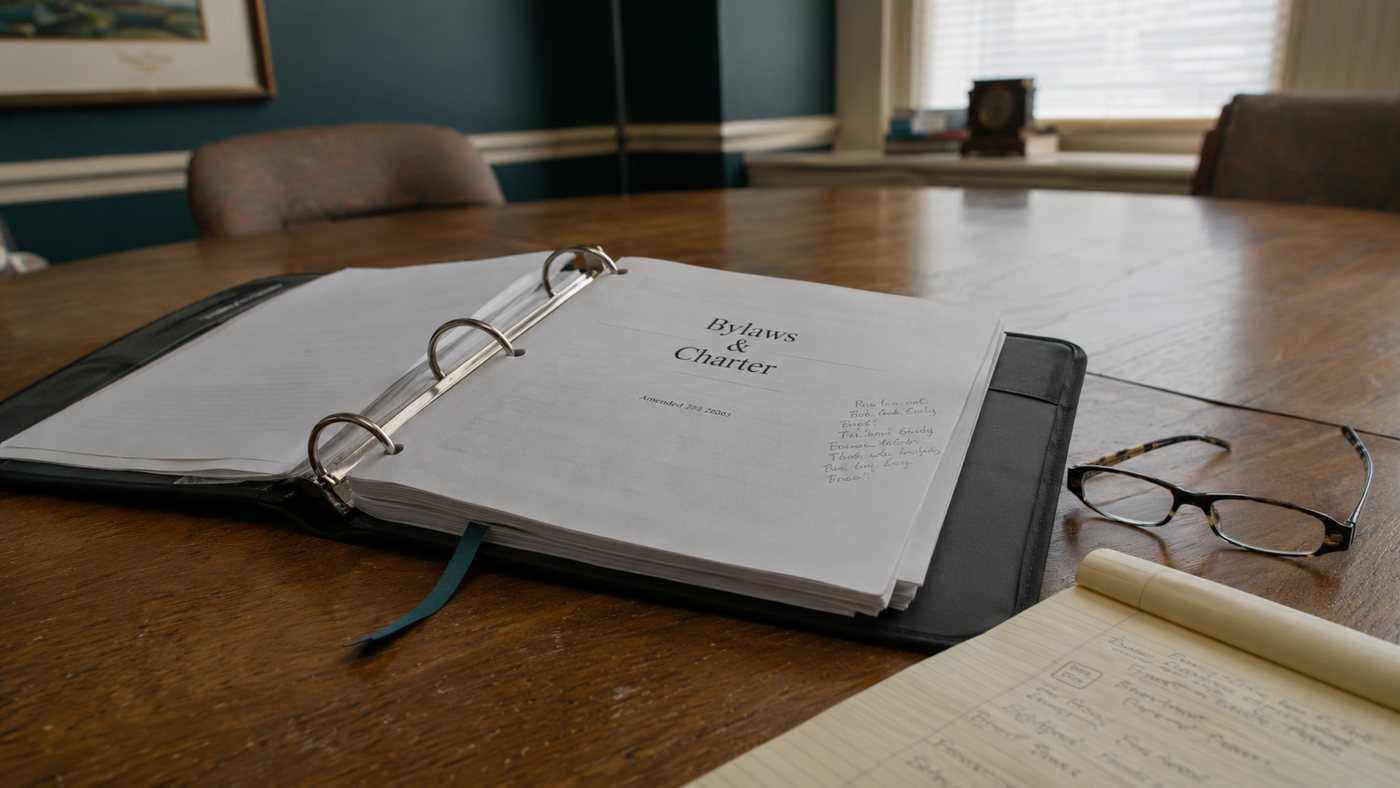
She starts at the top: charter, articles of incorporation, bylaws. She sits with you first to understand the goals and concerns before building anything. Then she builds training tailored to your actual documents and structure, anchored on the two things boards least understand: fiduciary responsibility and conflicts of interest.
The governing documents become a reference any member can use to keep the board on mission, and she flags where a charter or bylaws need updating. Recommendations that surface along the way can be built into the training itself or presented to the current governing board.
A board that understands its responsibilities
Training built around your own governing documents
Clear recommendations where the charter or bylaws need updating
Proof
She built a tailored, fiduciary-anchored training program for a foundation board, with charter and bylaws recommendations the room, including the attorney, agreed were needed.
She has also held the seat she trains others to fill: Governance Committee Chair of a Federally Qualified Health Center board, and a second governance-committee role at another nonprofit. She has published on fiduciary responsibility in the North Carolina Medical Journal.
Associations and nonprofits with boards, especially smaller ones. Either the board senses it needs to understand its role better, or it is heading off the rails.
She doesn't hand over a generic deck. She has written the bylaws herself, used a conflict-of-interest provision when one was needed, and chaired the governance committee she trains. The conviction is lived.
This is governance and fiduciary guidance. Where a question is legal, it goes to counsel.
Let's get to work.
Bring your charter and bylaws. She'll build the training around them.
Email Dee 919.810.6341Also from DCJ
Operational Excellence
One clean system where a tangled process used to be.
Strategy
A clear path from goal to action, with help walking it.
Navigation
The right people, mapped, with a warm way in.